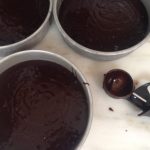
Extra Moist Chocolate Birthday Cake
Ingredients
- 2 cups cake flour
- 1 tsp baking powder
- 1/2 tsp baking soda
- 1 1/2 tsp salt
- 2 3/4 cups dark brown sugar packed
- 1 cup sour cream
- 1/4 cup heavy cream
- 3 yolks
- 2 large eggs
- 1 Tbsp vanilla paste or extract
- 1 oz unsweetened chocolate
- 1 scant Tbsp espresso powder
- 1 1/4 cups Dutch-process cocoa powder plus 1 tbsp black cocoa powder, if you have it, regular cocoa powder, if you do not
- 1 cup boiling water
- 1/4 cup oil
- 1 stick/ 8Tbsp unsalted butter melted and warm
Instructions
- Preheat the oven to 325 degrees F. Spray or butter 3 8-inch round cake pans or two 9x5-inch loaf pans, line the bottoms with parchment paper and spray or butter the paper. Set aside.
- Sift the flour, baking powder, baking soda and salt together into the bowl of a stand mixer and then briefly whisk the mixture to ensure the leavening is incorporated. Add the sugar and place the bowl on the stand mixer fitted with the paddle attachment, and mix on low speed while preparing the rest of the batter.*
- In a medium-sized bowl, whisk together the sour cream, heavy cream, yolks, eggs, and paste and set aside.
- In another medium-sized bowl, add the chocolate, espresso powder, cocoa powder, boiling water, and oil to the melted butter. Whisk vigorously until the chocolate melts and the mixture is smooth. The butter may separate from the chocolate a bit once the water is added. Do not worry: after the chocolate mixture is added to the rest of the batter it will all come together.
- Keeping the mixer on low speed, slowly add the sour cream mixture to the dry mixture in the bowl. Once added, stop the mixer and scrape down the bowl with a rubber spatula. Now slowly add the chocolate mixture. Once added, stop the mixer and scrape the bowl with a rubber spatula again, making sure to scrape up from the bottom of the bowl to ensure the chocolate is thoroughly integrated with the rest of the batter. mix on low speed for an additional 15 seconds and remove the bowl from the mixer. Mix once by hand with a rubber spatula to ensure complete incorporation.
- Pour the batter into the three prepared pans or two loaf pans. Place the pans in the middle rack of the oven and bake for about 25 to 30 minutes, rotating the pans and shifting their positions after 12 minutes. Begin checking for doneness at about 23 minutes. The cakes are done when a cake tester comes out with a few moist crumbs. Loaf cakes will take longer to bake - up to 50 minutes total. Check the loaves after 25 minutes and then again at 45 minutes.
- Let the cakes cool in their pans for about 10 minutes then invert them out of their pans on to a cooling rack (if making loaf cakes, let cool for 20 minutes before releasing them by running a paring knife around the edges). Let them cool to room temperature. At this point you may ice them (if making loaf cakes, frosting is not necessary - I suggest serving slices with a dollop of unsweetened whipped cream or vanilla ice cream), or wrap them in plastic wrap and then tin foil and freeze them for up to a month. The layers do not need to be defrosted prior to decorating, but should be prior to eating.
Notes
*Mixing up dry ingredients with a stand mixer is a trick I picked up from BakeWise's Shirley Corriher to ensure your dry ingredients are truly incorporated.